Pink Gin
A historic and minimalist gin classic that utilizes Angostura bitters for both flavor and its namesake delicate pink hue.
Ingredients
| 60 ml | Gin | |
| 1 dash | Angostura Bitters |
Got these ingredients?
Add them to your bar and discover more cocktails you can make.
Instructions
- 1
Rinse a chilled cocktail glass with a dash of Angostura bitters, swirling it around to coat the inside and discarding any excess.
- 2
Stir the gin with ice in a mixing glass until very cold.
- 3
Strain the chilled gin into the prepared glass.
- 4
Alternatively, build in a glass with ice and a dash of bitters, stirring gently.
Pink Gin
Pink Gin is perhaps the most minimalist cocktail in the IBA repertoire. Originating in the British Royal Navy, it is a bracing, high-proof drink that relies entirely on the quality of the gin and the aromatic depth of Angostura bitters.
Key Takeaways
- Naval Heritage: Created as a way to make bitter medicine (Angostura) more palatable for sailors.
- Bone-Dry: Contains no sugar or citrus, making it a purist’s favorite.
- ABV: Very high (approximately 35-40%).
- Primary Glassware: Chilled cocktail glass or small rocks glass.
The History of the Pink Gin
The drink was popularized by the British Royal Navy in the 19th century. Sailors used Plymouth Gin to dilute the intense, medicinal Angostura bitters that were used to treat sea sickness. It became a staple of British social life and was standardized in the 1961 IBA list.
Ingredient Definition and Selection
Gin
Historically, Plymouth Gin (which is slightly softer and earthier than London Dry) was the standard. However, a high-quality London Dry also works exceptionally well.
Angostura Bitters
The only other ingredient. It provides the drink’s name, its pinkish tint, and its complex, spicy aromatic profile.
Preparation and Best Practices
- The Bitters Rinse: The most sophisticated way to serve a Pink Gin is to “season” the glass with bitters first. This ensures the aromatics are present without the liquid being overly dark.
- Cold Service: Because there is no dilution from juice, the gin must be stirred with ice until it is near freezing.
- The Garnish: A large lemon peel expressed over the top is the traditional and necessary final touch to bridge the gin and bitters.
Nutritional Information
- Calories: Approximately 150 kcal per serving.
- Carbohydrates: 0g.
- Sugar: 0g.
You Might Also Like
More Gin cocktails to try.
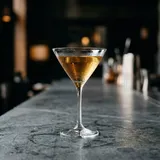
Gin And French
A simple, bone-dry classic consisting of Gin and French (Dry) Vermouth, often served as a smaller Martini variation.
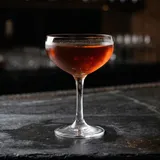
Gin And It
A simple, sweet classic consisting of Gin and Italian (Sweet) Vermouth, the precursor to the modern Martini.
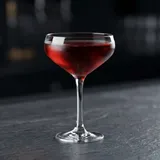
Grand Slam
A simple and bright gin classic that pairs sweet vermouth and grenadine for a fruity, spirit-forward profile.
Orange Blossom
A simple, bright, and citrus-forward gin classic that combines two parts gin with one part fresh orange juice.
Riding Club
A simple and direct gin classic that highlights the synergy between botanicals and sweet red vermouth.
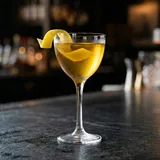
Alaska
A classic gin cocktail flavored with the herbal sweetness of Yellow Chartreuse and a touch of orange bitters.