Horse's Neck
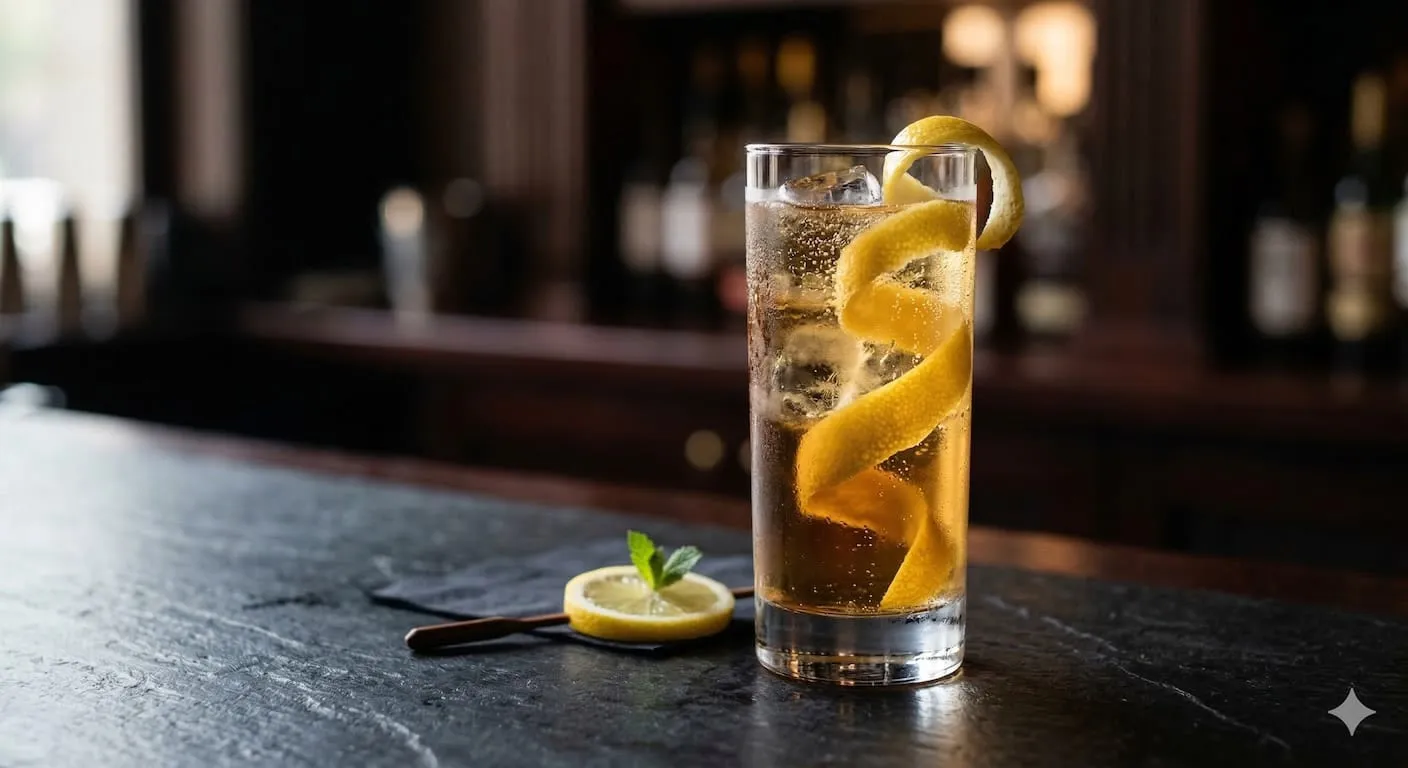
A refreshing long drink featuring brandy and ginger ale, with a signature citrus twist.
Ingredients
| 40 ml | Cognac | |
| 120 ml | Ginger Ale | |
| 1 dash | Angostura Bitters | |
| Garnish | ||
| 1 peel | Lemon peel | |
Got these ingredients?
Add them to your bar and discover more cocktails you can make.
Instructions
- 1
Pour cognac and ginger ale directly into a highball glass filled with ice.
- 2
Stir gently.
- 3
If desired, add a dash of Angostura Bitters.
- 4
Garnish with a long lemon peel spiral.
Flavour Profile
Nutrition
150 kcal
18 g
15 g
Horse’s Neck
The Horse’s Neck is an iconic “Contemporary Classic” highball composed of Cognac (or Brandy) and Ginger Ale, distinguished by its signature garnish: a single, continuous Long Lemon Peel Spiral. It is a refreshing, low-complexity drink celebrated for its visual elegance and its historical transition from a non-alcoholic “mocktail” to a global cocktail staple.
Key Takeaways
- Standard Base: Cognac (IBA Standard).
- Core Modifier: Ginger Ale (Sweet and bubbly).
- Defining Visual: Full-length lemon spiral draped over the glass rim.
- Flavor Profile: Light, effervescent, and citrusy.
History: From Temperance to the High Seas
The Horse’s Neck has one of the most unique trajectories of any classic cocktail.
The Non-Alcoholic Era (1890s)
In its original form, the “Horse’s Neck” was a “temperate” drink consisting solely of ginger ale, ice, and the lemon peel. The long spiral of peel was said to resemble the neck of a horse, giving the drink its name.
The “Stiff” Variation
By the early 1900s, bartenders began adding brandy or American rye whiskey to the mix. These “spiked” versions became so popular that the original non-alcoholic version was eventually forgotten, and the brandy-based Horse’s Neck became the global standard.
British Naval Popularity
The drink became a favorite of the British Royal Navy in the mid-20th century, where it was served as a sophisticated but simple social beverage during formal events.
Component Breakdown
Cognac vs. Whiskey
The IBA specifies Cognac, which provides a rich, grape-based complexity and vanilla notes that integrate smoothly with the ginger. However, Bourbon or Rye Whiskey (the “American” style) offer a spicier, more robust profile that is also historically accurate.
Choice of Ginger Ale
Unlike the Dark ‘n’ Stormy, which requires spicy internal ginger heat, the Horse’s Neck relies on the sweetness and lighter carbonation of Ginger Ale. This allows the aromatics of the lemon peel and the brandy to remain the stars of the show.
Preparation and Presentation
- The Peeling (Critical Step): Use a channel knife or a sharp paring knife to remove the peel of a whole lemon in one continuous spiral. Avoid as much of the bitter white pith as possible.
- Glassware: Fill a Highball glass with ice.
- The Garnish Placement: Drape one end of the lemon spiral over the rim of the glass and allow the rest to coil down through the ice. This ensures that every sip is infused with fresh lemon oil.
- The Build: Pour the 40ml of Cognac over the ice, then top with 120ml of ginger ale.
- The Final Touch: Add a dash of Angostura Bitters (optional but highly recommended) to add a layer of spice and complexity.
Tasting Profile
The Horse’s Neck is a gentle, refreshing long drink. The initial palate is greeted by bright citrus aromatics from the lemon oil. This is followed by the sweet, gingery fizz of the ale, which is grounded by the warm, woody, and fruity notes of the Cognac. The finish is clean and slightly spicy, making it an ideal sessionable cocktail.
You Might Also Like
More Cognac cocktails to try.
Bloody Mary
The quintessential savory cocktail, known for its complex spices and tomato base.
Moscow Mule
A zesty, refreshing vodka cocktail served in a signature copper mug.
Dark 'n' Stormy
A trademarked combination of Goslings Black Seal Rum and ginger beer.
Suffering Bastard
A historical 'hangover cure' involving both gin and brandy.
Cuba Libre
A simple, classic combination of rum, cola, and lime with a revolutionary history.
Sea Breeze
A simple, tart, and refreshing highball with vodka and bright fruit juices.