Dirty Martini
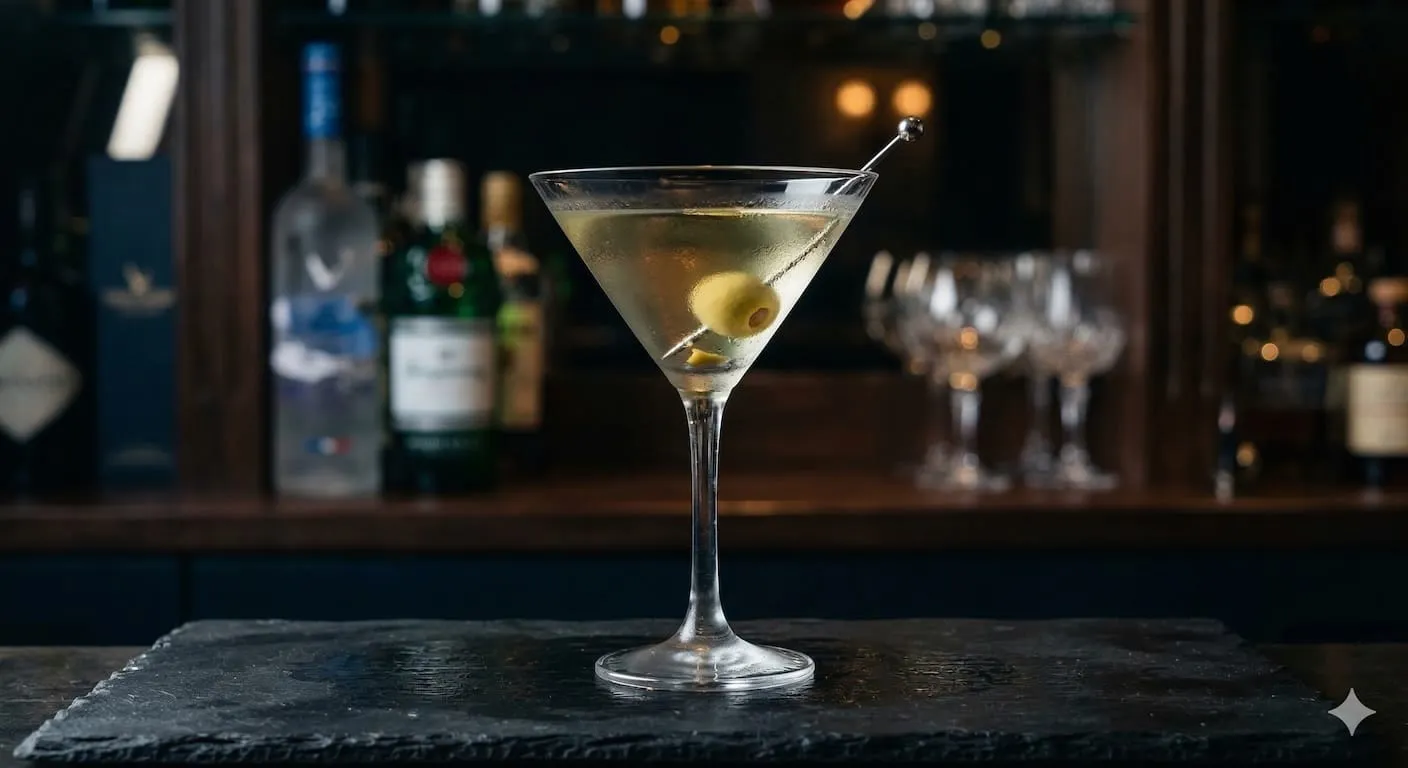
A savory twist on the classic martini using olive brine for a saltier profile.
Ingredients
| 60 ml | Gin | |
| 10 ml | Dry Vermouth | |
| 10 ml | Olive Juice | |
| Garnish | ||
| 1 garnish | Green Olive | |
Got these ingredients?
Add them to your bar and discover more cocktails you can make.
Instructions
- 1
Add all ingredients into a mixing glass with ice.
- 2
Stir well.
- 3
Strain into a chilled cocktail glass.
- 4
Garnish with a green olive.
Flavour Profile
Nutrition
180 kcal
2 g
1 g
Dirty Martini
The Dirty Martini is a savory, “New Era” variation of the classic Dry Martini that incorporates Olive Brine (juice) alongside Gin and Dry Vermouth. It is a polarizing but globally popular cocktail celebrated for its saltiness, umami depth, and functional role as the definitive savory aperitivo.
Key Takeaways
- Defining Ingredient: Olive Brine (Cloudy appearance).
- Core Spirit: Gin (Traditional) or Vodka (Modern preference).
- Flavor Profile: Salty, savory, and spirit-forward.
- Glassware: Chilled Martini or Cocktail glass.
History and Popularization
The concept of adding olives to a Martini dates back to the late 19th century, but the “Dirty” modification—adding the brine itself—is attributed to New York bartender John O’Connor in 1901.
Presidential Influence
The drink gained significant notoriety in the mid-20th century, famously enjoyed by Franklin D. Roosevelt, who was known to make his own martinis and often favored the addition of a “splash” of brine.
Modern Comeback
While long dismissed by “purist” bartenders, the Dirty Martini has seen a massive resurgence in the 21st century as consumer tastes shifted toward savory and culinary-inspired cocktails.
Ingredient Analysis: The Brine Factor
The Brine (Olive Juice)
The quality of the brine is more important than the brand of vermouth in a Dirty Martini.
- Freshness: Brine should be clear and sourced from a jar of high-quality green olives (like Castelvetrano or Halkidiki).
- Salinity: The brine provides the drink’s saltiness, which suppresses bitterness and enhances the perception of the gin’s botanicals.
Gin vs. Vodka
- Gin: The botanical choice. The salt in the brine interacts beautifully with the juniper and citrus notes of a London Dry Gin.
- Vodka: The “clean” choice. Many drinkers prefer a Vodka Dirty Martini as it allows the pure flavor of the olive brine to shine without botanical competition.
Dry Vermouth
In a Dirty Martini, the vermouth is often reduced to a minimum (a “rinse” or a small splash) because the salt and acidity of the brine already provide the necessary complexity.
Preparation Mechanics
- Stirring for Clarity: Like the Dry Martini, the Dirty version is traditionally stirred with ice for 30 seconds. This maintains the silky texture.
- Note: Shaking a Dirty Martini is common in commercial bars to achieve an “ice-cold” temperature, but it will result in a more diluted, aerated, and cloudy drink.
- Temperature Objective: Aim for the coldest possible temperature (~28°F). The salt in the brine allows the drink to remain liquid at temperatures where pure water would freeze.
- The Garnish: A Green Olive is mandatory. Many bartenders serve the drink “with a side” of extra olives or even blue-cheese stuffed olives for added decadence.
Tasting Profile
The Dirty Martini is a “brine punch.” The initial palate is salty and bracingly cold. The mid-palate reveals the herbal structure of the gin, while the finish is long, savory, and slightly oily, leaving an umami sensation that is highly effective at stimulating the appetite.
You Might Also Like
More Gin cocktails to try.

Angel Face
A potent, fruity classic made with gin, apricot brandy, and Calvados.
Gibson
A sophisticated gin martini variation traditionally garnished with a cocktail onion.
Vesper
James Bond's original martini, a powerful blend of gin, vodka, and Lillet Blanc.

White Lady
A crisp, elegant gin sour that is a close relative of the Sidecar.

Bijou
A jewel-toned classic featuring gin, vermouth, and Green Chartreuse.

Tipperary
A rich, herbal Irish whiskey classic that bridges the gap between a Manhattan and a Bijou.